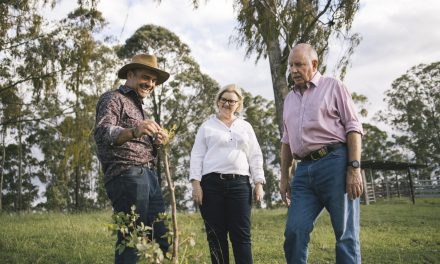
During the week, Kaaren Haywood and Jason Graefling work in healthcare. At weekends, its their animals who get their care and attention. They told RICK BAYNE about why they moved to the country and how dual-purpose breeds help them get the most out of their land.
Kaaren Haywood and Jason Graefling could be described as living a dual existence.
During the week they are taking care of people in their full-time healthcare jobs. At the weekend, they’re taking care of animals on their small Fleurieu Peninsula farm.
And to perpetuate the dual existence, they are farming dual-purpose sheep and beef breeds.
About five years ago, in search of a tree change, Kaaren and Jason moved with their two children from Adelaide to their 35-hectare retreat. Now they are working towards being self-sufficient on their little farm and selling products directly to the public.
“We just wanted to move back to the country to align ourselves a bit more with what we enjoy,” Kaaren said.
“We had a fair size vegetable garden in the suburbs. We used to call my husband a frustrated vegie farmer because he used to grumble about buildings going up around us and blocking out sun for the carrots.”
Both their children went to Urrbrae Agricultural High School in Adelaide and are interested in the land, so moving to the country was a unanimous decision.
“We’re not quite self-sufficient on the farm but that is the plan,” Kaaren said.
“We have two jobs … we’re full-time working in healthcare during the week and we’re full-time farmers on the weekends. We’re just small and could be classified as a hobby farm, but we’re a working farm.”
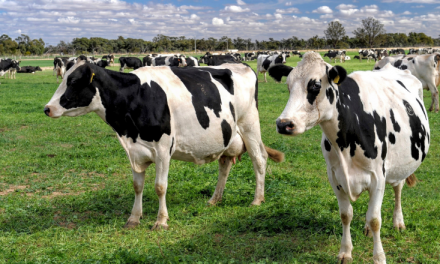
At the moment they have about 30 sheep and 11 cows, of mixed breed, including a Friesian Holstein, dairy shorthorn and Normande. They aim to maintain the sheep flock but build the cow herd to about 20 and set up their own milking system and eventually sell products directly from the farm to consumers.
Their son is the resident apiarist, developing an interest in bee keeping while at school. He manages five hives and is accredited to sell to the public.
They are interested in heritage and dual-purpose breeds to get the most out of their land, with Corriedale sheep noted for both their wool and meat and Normande cows, noted for both milk and beef.
They expect their land will have no trouble coping with about 20 cows, noting that the sheep and the cows are happy to co-exist and that the existing animals are growing well on the property.
“Because we’re not coming from a farming background, we want animals that are responsive to us, productive and fairly quiet and calm,” Kaaren said.
“We need to be able to handle them and get up close and personal.
“For farmers like ourselves with a smaller property, we want to get as much volume and maximum output from our animals as possible.”
Although only small, Kaaren and Jason say the property will be a fully-fledged dairy, with plans to build a five-a-side swingover milking system.
Excitement is building with their four Normande cows due to calve in the next few months.
Recently, Kaaren and the family visited France, where the Normande breed originated, to look at herd management, including breeding, housing and husbandry and usage of milk and meat products
“In Australia, if you have upwards of 200 cows, you’re considered to be a real dairy farmer, but there are plenty of smaller farms,” Kaaren said.
“In France, they don’t have anything nearly as big as us and they still function quite well and produce the milk they need.
“There are a lot of farmers that sell a variety of products directly to consumers, including yoghurts, ice-creams and cheeses like we are planning. We still have to have all of the equipment and manage our cows and give them animal husbandry.
“The French farmers were all very welcoming and encouraging about what we’re doing. We believe we can definitely make it work here in Australia.”
They plan a once-a-day milking program and won’t be taking calves from the cows.
“Because they are dual purpose, we want to grow them out on their mothers and if we do happen to have bull calves, we can on-sell them back into the market,” Kaaren said.
They have a growing base of loyal customers enjoying the farm’s sheep meat and hope to build a new clientele for dairy and beef, with plans to start milking within the next 12 months.
“We have a single machine to milk and we have used that, but we don’t want to rush the process. We want it to be right,” Kaaren said.
Kaaren’s love of Normandes has led her to become the inaugural chairperson of the new Australian Normande Cattle Association.
“We want to educate people on the beauty and versatility of this breed and show them that there are other breeds out there that can do the same thing as those they are currently interested in,” she said.
“The breed has been in Australia since the 1970s and the animals themselves have proven that they are suited to our environment.
“They produce a good volume of milk with good protein and butter fat content and they are well-known for their meat and its good marbling characteristics.”
Dual-purpose farmers