Five Tasmanian farmer groups will receive tailored support to build strength and resilience.
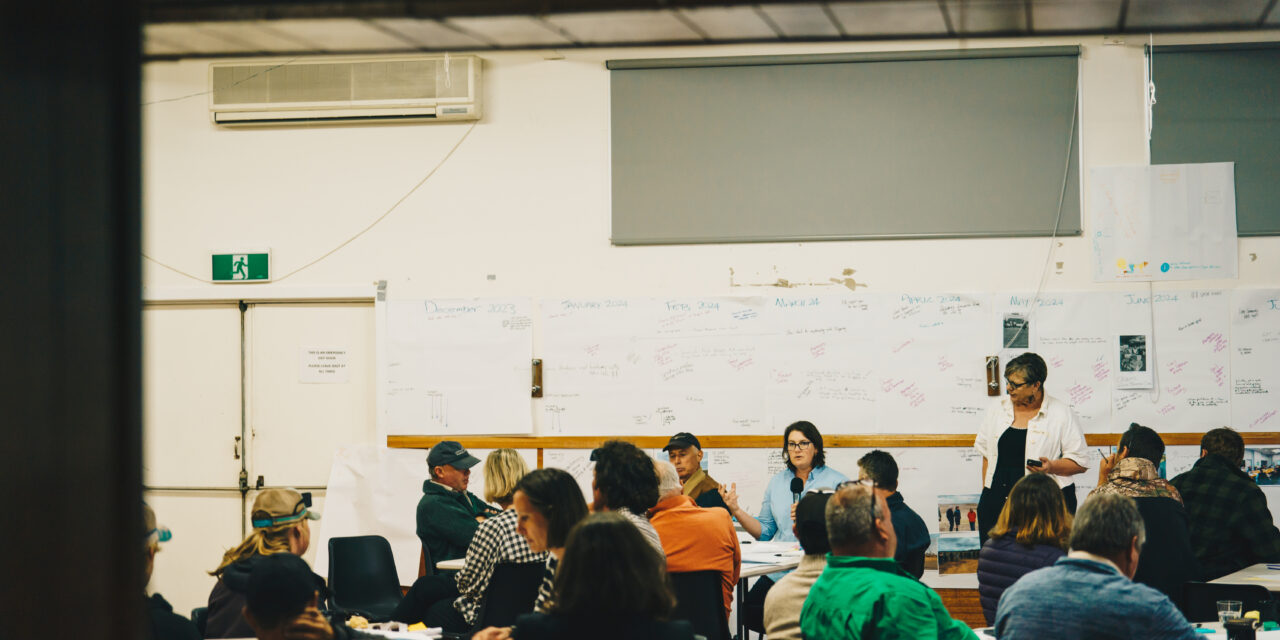
The TAS Farm Innovation Hub has announced five successful farmer groups selected to take part in a new pilot program designed to build long-term strength, connection and resilience in Tasmanian farming communities.
The Farmer Group Support Pilot will provide each group with a 12-month support package valued at $55,000 per group to help reduce administrative burdens, strengthen group co-ordination and support climate resilience activities.
The five successful groups are:
Coal River Products Association;
East Coast Primary Producers;
King Island Beef Producers Group;
Soil First Tasmania; and
Tamar Valley Farm Discussion Group.
The pilot offers hands-on facilitation and flexible funding to help groups grow stronger, lead with confidence and contribute to a more resilient farming future.
TAS Farm Innovation Hub director Sandra Knowles said strong farmer groups were the backbone of connected, capable rural communities.
“Farmer groups play a crucial role in helping producers share knowledge, solve problems locally and stay connected,” she said.
“But we know many of these groups are stretched thin, often run by volunteers who juggle the demands of farming with the effort it takes to keep a group going.
“This pilot is about removing some of those roadblocks and giving groups the support they need to plan ahead, grow their impact and stay active in their communities.”
Each group will receive co-ordination services valued at $40,000, delivered through a dedicated hub-based facilitator who will work closely with them to support planning, communication, engagement and event delivery.
Groups will also have access to up to $10,000 for group-led activities that support climate-smart practice changes on farm and up to $5000 in flexible admin support to reduce day-to-day burdens on group organisers.
“This support is designed to let groups focus on what really matters — delivering meaningful outcomes for their members,” Sandra said.
“Whether that’s water efficiency, better decision-making, or tackling long-term challenges like drought, the program helps groups take action that’s relevant to their region and situation.”
One of the successful groups, Soil First Tasmania, welcomed the opportunity to build on the strong foundations it had established through volunteer efforts.
“We applied because, as a small volunteer-led group, we’ve achieved a lot with very little and saw this pilot as a chance to build on that momentum and to strengthen our organisation,” group secretary Bec Addison said.
“Soil First Tasmania has already shown the power of bringing farmers together to make positive change for soil health and sustainable agriculture.
“We’re excited that this pilot will give us the resources and direction we need to renew our group and expand our impact.
“We’re hoping to create a stronger, more sustainable organisation that can keep supporting Tasmanian farmers for years to come.”
Nick Lyttle from the King Island Beef Producer Group highlighted the group’s motivation for getting involved with the TAS Hub initiative.
“We applied because we believe our members will benefit from the knowledge network of the TAS Farm Innovation Hub to improve their on-farm practices and alter their production systems to be more climate resilient,” he said.
“We are hoping to hold workshops that will stimulate and, in some cases, challenge, producers’ thinking to improve their businesses to deal with more frequent weather extremes.”
The pilot builds on successful earlier work with the East Coast Primary Producers Association, which demonstrated the real impact of tailored support, particularly around administration and co-ordination.
“We’ve seen first-hand that when you back farmer groups with the right kind of help, they achieve great things,” Sandra said.
“Farmers have been clear — they want support that fits their local context and helps them take action, not just access more information.
“This pilot recognises the value of grassroots knowledge and gives farmer groups the tools to strengthen their leadership, planning and impact.”
The program will also help test scalable, cost-effective support models for farmer groups, with insights contributing to the TAS Hub’s long-term strategy and potentially informing national approaches to drought and climate resilience.
“This isn’t just about helping five groups, it’s about learning how to deliver meaningful, efficient support that could be rolled out more broadly across Tasmania and beyond,” Sandra said.
The TAS Farm Innovation Hub is one of eight hubs nationally funded through the Australian Government’s Future Drought Fund. The hub is based at the Tasmanian Institute of Agriculture at the University of Tasmania and delivered through a wide network of industry and community partners.
Support for farmer groups