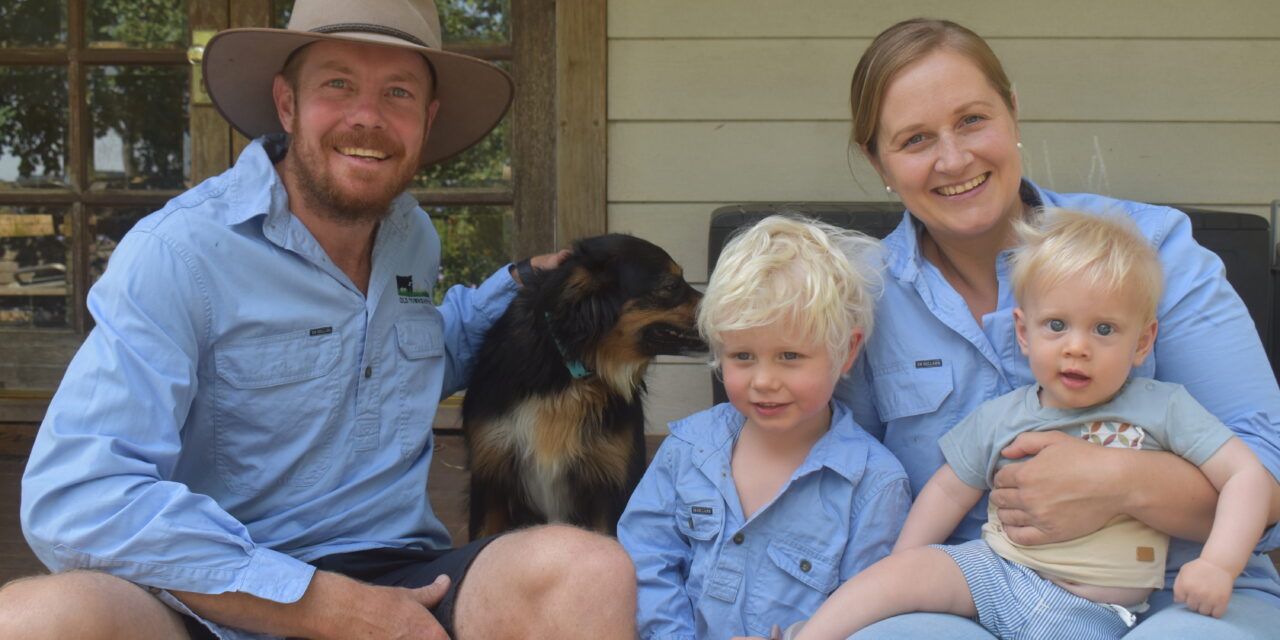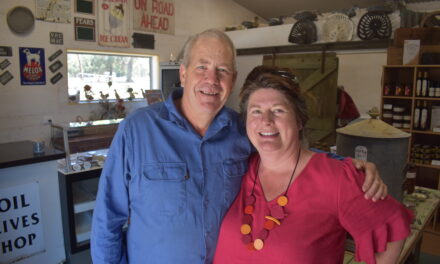
As part-time vets and part-time farmers, Kate and Stephen Warth are all about health in their beef operation.
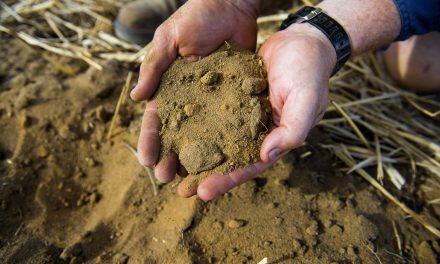
“We want a healthy animal coming from a healthy plant that comes from a healthy soil,” Stephen said of their farm at Panmure in south-west Victoria.
They are taking their time in establishing the business and making sure that it grows from the ground up, with Stephen still working three days as a vet and Kate planning to return to her career after maternity leave with their second child.
But they think it’s worth the effort, not only for their own futures, but for the next generations.
Both Kate and Stephen come from multi-generational farming families.
Kate’s grandparents used the land as a dairy farm, while her parents converted to beef and later leased to a neighbouring dairy farmer.
Stephen’s father was a sugar cane and cropping farmer from Zimbabwe, while his mother came from rural roots in Europe, horse livery and deer.
Farming wasn’t an option in Zimbabwe due to the economic and political environment, so Stephen moved to Australia in 2008 to study veterinary science at Murdoch University in Perth, later meeting Kate when he came to south-west Victoria for work.
In 2021, Kate and Stephen purchased the property and started their regenerative journey.
As they got more cattle, they gradually reclaimed the leased land and now control the full 65 hectares.
They started with F1 dairy-beef crosses and then bought more Jersey-Angus cross heifers.
The first year they calved down nine animals on about 24ha and had grown to calving 35 before the drought reduced that to 26.
They are using genetics to develop a grass-based, smaller animal with improved beef fat and tenderness.
Most of the herd is Jersey-Angus cross, with a few pure beefies, but Stephen and Kate plan to continue with the crosses.
“We like the calves the crosses produce and the Jerseys have good meat characteristics,” he said.
They use a lot of American semen for an animal focused on harvesting its own food, not relying on a lot of grain to survive, and have been introducing New Zealand semen and some Aberdeen Angus genetics from Australia.
“A smaller, thicker animal seems to fit our system better,” Stephen said.
“A big, tall 800kg cow can’t do what we’re trying to do, and they don’t fatten as quickly on grass.”
They have about 80 animals in total and could run a few more.
They agist some of their cattle out to take pressure off our farm as their priority is getting the biodiversity, soil and plant health right.
Off-farm work
There’s also the need to keep working to subsidise the beef operation as it grows, putting plans for on-farm processing and other stock mixes on hold for now.
Stephen is solely a large animal vet, primarily cattle, while Kate plans to return after maternity leave to focus on small animals, saying she needs the mental stimulation of her career.
While Stephen enjoys work, he also loves “growing grass, walking over paddocks and seeing what’s changing”.
Once the beef operation is well established, they will look at introducing sheep and a few house cows for milking.
“I wouldn’t mind milking three cows for the house, and you could run sheep and chickens in the same ecosystem,” Stephen said.
“They all complement each other and the diversity will come.”
They already have a veggie patch and fruit orchid.
While they both have farming backgrounds and the benefits of a profession that helps with animal health, they had to study up on new regenerative ways to grow their feed, embracing podcasts, books and YouTube videos.
They shift the cows four times a day over summer to give them a fresh patch of grass to eat as much out as possible and trample everything else.
“Everything is utilised or converted into mulch, and we’re trying to focus their energy on a small piece of country at any one time. Everything here is a work in progress,” Kate said.
They have used a Gallagher Landcare grant to fence off 1.5km of the farm to create a wildlife corridor along the Mt Emu Creek and a Moyne Shire grant to direct seed the eastern and western boundaries to increase vegetation cover and adopt regenerative agricultural practices to help repair the local environment.
They have just received a Landlife SouthWest grant to revegetate a portion of the river.
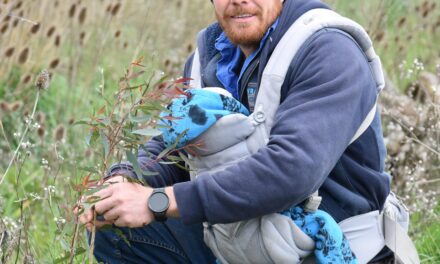
“We’ve established native plants along the river bank to overcome erosion and provide habitat for more diversity and improve the river health,” Kate said.
“The exciting thing is that we’ve got self-seeded trees coming through now that it’s fenced off.”
They have also seen animal health benefits from introducing a diverse multispecies feed offering, with the multispecies pastures being a big help when traditional rye-grass paddocks have failed to take hold during drought.
“We’re not organic,” Stephen said.
“We embrace alternatives and avoid treatments and herbicides as much as possible, but believe animals should be treated when they need it.
“On the re-gen side of things, we want to get to the point where everything is self-sustaining with minimal inputs other than addressing any deficiencies in soil, plant or animal health.
“We do buy in some hay, but it is ideally from like-minded farmers with diverse paddocks.”
Dung beetles were imported from Tasmania to boost numbers and to get more autumn activity.
“They’re part of the nutrient cycling program,” Stephen said.
“They provide a benefit by removing a habitat for flies, but also bury a lot of poo that aerates the soil and brings nutrients deeper into the profile.”
OLD TOWNSHIP FARM
The business operates under the name Old Township Farm, with the beef taken to an abattoir at Edenhope, processed by a butcher in Heywood and then sold directly to clients.
“People want to know where their protein is coming from,” Kate said.
“They want healthy and happy beef with minimal inputs. They want to know that an animal has had a good, stress-free life.”
They sell animals into the commodity market if they don’t fit their plans from a genetics or appearance perspective, or if they are excess to likely sales.
Their meat is also a home-grown favourite.
“Absolutely, we eat it,” Stephen said.
“That’s where it started – wanting to feed our own family. Our goal is to feed ourselves happy, healthy beef and our customers get to enjoy the excess.
“We pride ourselves with high-quality food and knowing where it came from.”
Vets build regenerative beef future