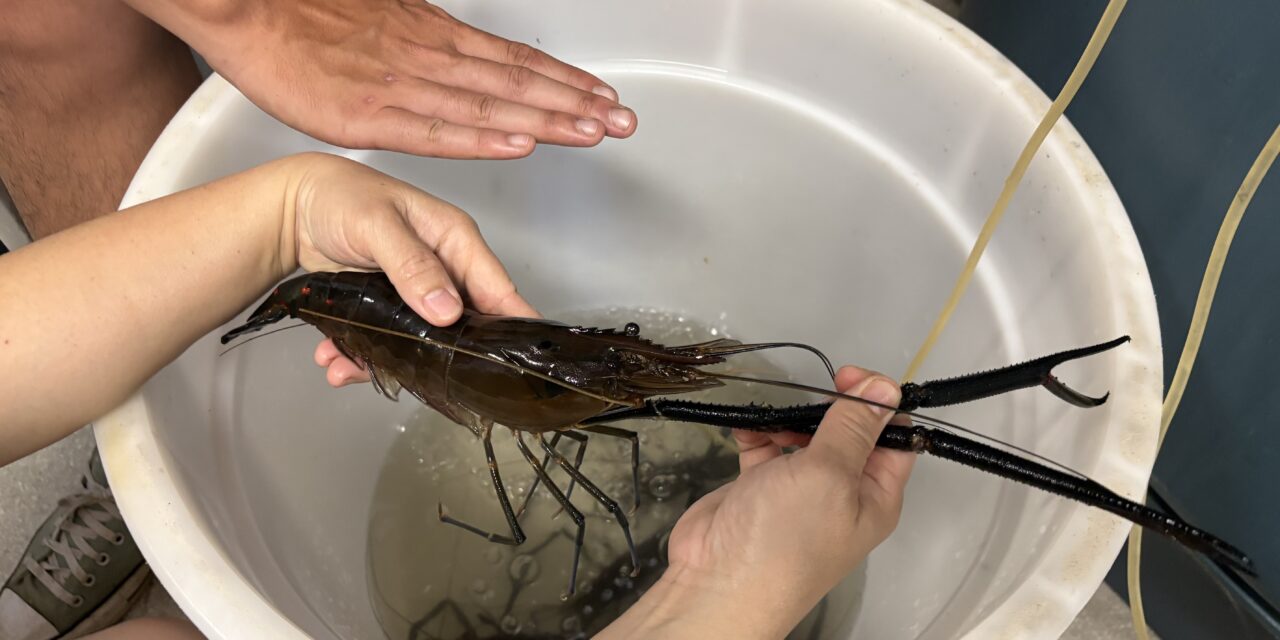
The giant freshwater prawn has been a tasty meal for multiple generations but a new First Nations aquaculture project aims to share it with the country.
Catching a native prawn and throwing it on the fire to make a meal is something that has been done along Australia’s coastlines for thousands of years.
But when the staff at the Hope Vale Foundation in far north Queensland did just this, an idea began to form.
Innovation and commercialisation manager Tony Matchett had witnessed the process and recognised an opportunity worth seizing with the cherabin, or giant freshwater prawn.
“It was just a normal, everyday thing,” Hope Vale Foundation general manager Rachelle McIvor said.
“It’s one of those moments in time where everything lined up. It was just going down to get something to eat and that’s where the idea grew from.”
Hope Vale Foundation had been exploring aquaculture and aquaponics projects, beginning with the blacklip oyster.
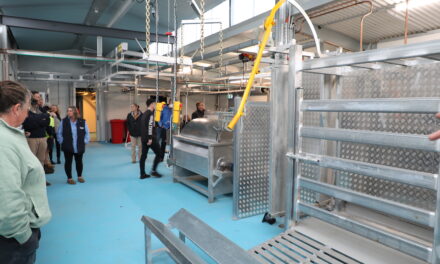
It has since established a research and development farm just outside Cooktown.
The hope is it will be able to commercialise the native cherabin in Australia for the first time.
The foundation is working on establishing a hatchery where juvenile cherabins will be bred and raised to market size.
The hatchery-to-grow-out model being developed is low emission, water-efficient and, importantly, grounded in culture.
The project is being developed alongside the University of the Sunshine Coast, which Rachelle said put a scientific lens on traditional practices.
“If we’ve got the research and science behind it … we’ve got the evidence to back it,” she said.
Hope Vale Foundation attended the EvokeAg conference in Melbourne in February.
The event brought together innovators across the agriculture sector both within Australia and internationally.
Rachelle said it represented a rare chance for the foundation to showcase its achievements.
“It’s an amazing opportunity that legitimises our farming model and our farming practices,” she said.
“It’s new, it’s native and gives Australia a look at what we have.
“It’s also a way to define our identity coming up to the Olympics.”
Ultimately, the foundation’s board has a vision for economic development, employment, food security and generational opportunity for the region, Rachelle said.
She hopes the humble prawn will help realise this long-held goal.
“We’re in a position to help others build their own wealth and build opportunities for the next generation,” she said.