There is a certain satisfaction in producing food rather than a commodity. And Michael Wohlstadt believes it is something other farmers should look into. RICK BAYNE has the story.
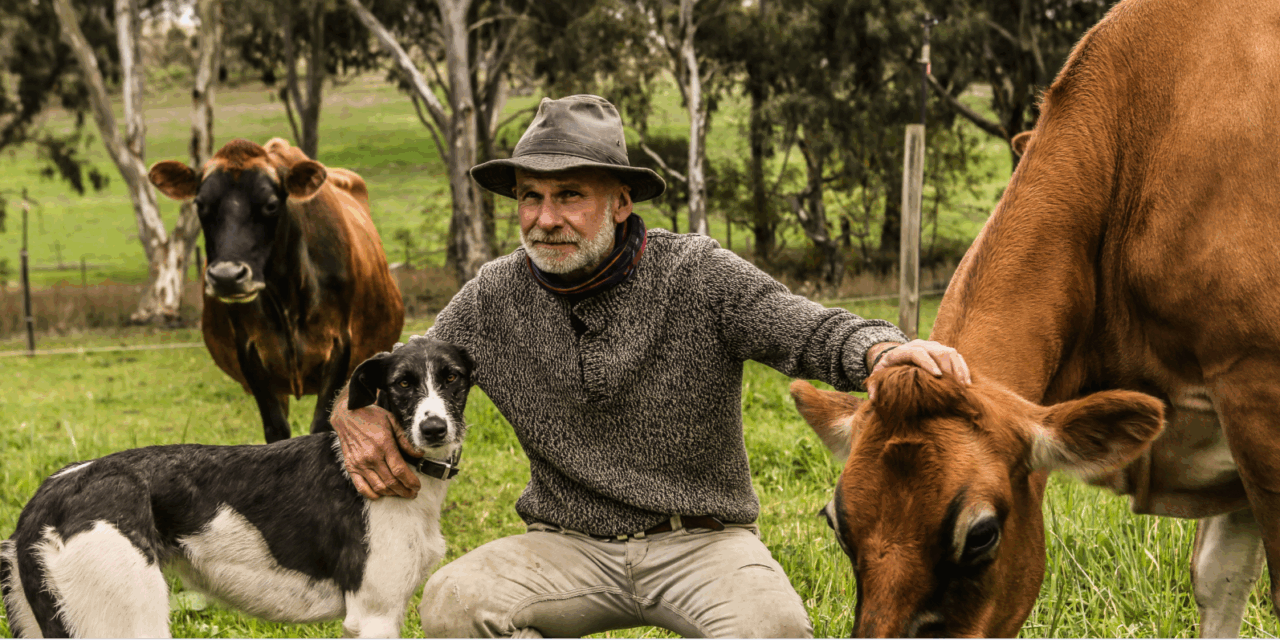
Michael Wohlstadt says everything about his mixed farm at Lyndoch in South Australia’s Barossa Valley is old-school, but that’s more of a bonus than a hindrance.
Recently named producer of the year at the 2025 Delicious Harvey Norman Produce Awards, Michael says his adherence to traditional mixed farming has kept him in good stead for 45 years and counting.
Although the farm and Michael are known as The Dairyman, the farm has a lot more than cows and Michael advocates the value of farming that produces food by farmers adding value to their production, whether it be with cows, pigs, mushrooms, vineyards or adding on B&Bs.
“I used to milk cows to sell milk as a commodity to a processing factory, but about 15 years ago I shifted across to a different model,” he says.
“Typically, farmers don’t produce food, they produce a commodity. But nothing leaves here as a commodity, it’s all converted to food.”
Michael farms on 32 hectares of alluvial flats in a secluded valley at the foothills of the Barossa Ranges. When he bought the property, it was a grazing farm turning off 200 lambs a year.
Today, about a quarter of the land is dedicated to vineyards, there are about 80 free-range pigs, 20 Jersey cows, a small herd of vealers, an oyster mushroom enterprise and two B&Bs.
“When I moved to the Barossa when I was about 12, mixed farming was very common but it has gravitated to a monoculture — either vineyards or hill country grazing,” Michael said.
“What I’m doing is very atypical, but the mix has worked well for me.”
When he was starting, Michael’s main interest was milking cows and he has stuck with Jerseys over the years.
“I like their higher butterfat content, but for me it’s a bit like why do people follow their favourite football team?” he said.
“My first exposure to milking cows as a young teenager was with Jerseys and you become committed to them.”
Keeping with his traditional farming methods, Michael milks the cows in a four-stand walkthrough milking machine.
“It’s very old-school,” he said.
“Everything we do is old-school. Our way of farming and scale is designed to take people back at least 50 years.”
After the switch to home-grown produce, he makes butter and cream, buttermilk and has recently expanded into Italian cheeses ricotta, stracciatella, mozzarella and buratta. The male dairy calves are taken to veal.
The pigs — a mixture of heritage breeds, Berkshire, Hampshire and Tamworth — are raised on a combination of whole milk, skim milk and whey.
Like all of the animals, the pigs are treated with respect.
“There’s a very close connection to the animals,” Michael said.
“They’re not just a number, they all have a name and they have personalities. You’re better able to care for them if you know them as individuals.
“It’s probably the only milk-fed pig herd in Australia. In a lot of industrial production, they are just fed waste products.”
The pigs are also fed whole foods and crushed grain that Michael mills on site. There are no feed additives that taint meat and no growth stimulants or hormones used.
Continuing to evolve the business has kept farming more interesting for Michael and he has deliberately continued to build up diversity and scope of the product offering to justify employing people.
“I haven’t slowed down much but there’s a reality with my age, 68, that there’s a limit to what I’m capable of doing going forward,” he said.
The cheese is produced in collaboration with a long-term friend who has three part-time workers, while The Dairyman has two other employees alongside Michael.
He outsources vineyard pruning and picking to contractors along with cleaning of the two B&Bs.
Michael describes the venture as“ non-industrial farming”.
“Farming in the modern world can be tough. Prices aren’t great, costs are high and climate is a challenge and some of the results of that work is either a weight bill for something delivered or a transaction in a bank account,” he said.
Michael prefers the independence and personal touch that comes with producing food compared to a commodity.
“I deal with chefs and get feedback from them so I can deliver the product they are looking for,” he said.
“I go to two farmers’ markets and have a strong following of regular customers and they keep me up-to-date with how they cooked last week’s purchases or how their dinner party was fabulous.
“There are two values that come from this — the enhanced financial uplift that comes from controlling all steps in the process and the non-monetary benefit in the association, connection and feedback from the work you put in.
“I can only imagine if other farmers engaged this way, they might find their vocation more satisfying.”
Michael has no plans to retire and will continue his traditional farming styles and aim to maintain the right scale, mix and quality.
“A lot of foods have lost their flavour, taste and appeal and that’s largely a result of industrial-scale production,” he said.
The producer of the year award, nominated by chefs, is a career highlight for the veteran farmer.
Michael previously won South Australian categories for butter and cream and for pork, but this was his first national recognition.
“It was the 20th anniversary of the awards so it’s a significant achievement. They were also presented at the Sydney Opera House, so I got to go inside for the first time,” he said.
While he appreciates the honour, he also hopes it shines a light on alternative farming pathways and encourages other farmers to consider making their own product.
“It’s not for everyone and you don’t have to convert everything you do, but it could be complementary to commodity production,” he said.
“It’s an alternative that’s worthwhile looking at for farmers.”
Old-school success